for another take on the saga of My Bloody Valentine's disappearance and the epic delay for the sequel to Loveless, here's my 2008 Spin feature on the band's story, pegged to the reunion tour, and covering both the group's early days and what happened after 1995
"there are immaturities, but there are immensities" - Bright Star (dir. Jane Campion)>>>>>>>>>>>>>> "the fear of being wrong can keep you from being anything at all" - Nayland Blake >>>>>>>>>>>>>>>> "It may be foolish to be foolish, but, somehow, even more so, to not be" - Airport Through The Trees
Sunday, February 17, 2013
for another take on the saga of My Bloody Valentine's disappearance and the epic delay for the sequel to Loveless, here's my 2008 Spin feature on the band's story, pegged to the reunion tour, and covering both the group's early days and what happened after 1995
Saturday, December 16, 2017
Routes from the Jungle (Kodwo komp)
Melody Maker 1995
by Simon Reynolds
Lost classics like Lennie D Ice's "We Are E", which cheekily turned an African chant into an anthem for the Luv'd Up Nation. And like the sultry smooch-core of "Waking Up" by Nicolette (now of Massive, then of the Shut Up and Dance stable), and of Manix's unbearably tender "You Held My Hand". Lost-est and classic-est of the lot, and my absolute favourite hardcore track of all time, is Foul Play's remix of their own "Open Your Mind". With its angel-host harmonies and diaphonous ripple of succulent synth, this track is as goosepimply as the entire works of My Bloody Valentine liquidised in a blender and injected into your spine. Midway, the track veers into the twilight-zone, then turns vicious with a veritable St Valentine's Day Massacre of rapid-fire snares.
Other gems on Disc One include the febrile avant-funk of DJ Edrush's dark-core classic "Bludclot Artattack", as flesh-crawlingly foreboding as stumbling into a voodoo ceremony; the gloriously garbled "Secret Summer Fantasy" by the undeservingly forgotten Body Snatch (somebody anthologise their awesome "Just For U London", pu-leeze!!); plus A Guy Called Gerald's cyber-tribal "Nazinji-Zaka", making good its mysterious omission from the "Black Secret Technology" LP. Drawing mostly on late '94 and early '95, Disc Two is a handy survey of the state of the art-core. The old skool's rushin'-and-gushin' euphoria has given way to a more measured passion; fusion and
Friday, May 9, 2008
PORTISHEAD
Third
The Word, 2008
by Simon Reynolds
A confession: my copy of Dummy languishes in a cardboard box in the basement, one of many such boxes in which I keep the music I could never bring myself to get rid of but equally can't imagine ever actively desiring to hear again. Which is odd considering that Portishead's 1994 debut was one of my favourites of that year, but not so odd if you recall the chronic overexposure the album suffered over the ensuing couple of years, as chic-ly depressive background music in countless designer bars, trendy cafes and hair salons. Factor in the swarm of imitators churning out torch-tinged downtempo through the mid-to-late Nineties and you can see why Portishead got sick of themselves. In the almost 11 year gap between their second album (self-titled and essentially a recapitulation of the debut) and Third, the group struggled with the classic dilemma that faces all innovators (see: My Bloody Valentine), how to reinvent yourself (and thereby leave the copyists for dust) while still retaining your essential character.
Third pulls it off handsomely. Rarely resembling trip hop or the Bristol Sound, the sound is rockier, with a grating lo-fi edge (lots of distortion and painstakingly achieved rough edges) that will likely derail its prospects as dinner party ambience. The mood, though, is totally of a piece with Portishead's slim body of work so far. Once again, Beth Gibbons presents a portrait--vocally, melodically, lyrically--of a woman running out of reasons to delay her tryst with the Void. Running out language: again and again across these songs, there are references to an inability to verbalise: "The taste of life/ I can't describe/It's choking out the mind" (from "We Carry On," a title reminiscent of Samuel Beckett's "I can't go on... I'll go on" in The Unnamable) to "Silence" with its "wandered out of reach/too far to speak." The silence here is a despair too deep to be articulated, a blackness that threatens to seep up through the melancholic's speech and eclipse it completely. Hence the halting rhythm of some of Gibbons' melodies, creating a feeling that each line could be the last.
Musically, there's three sets of--on the face of it--incongruous influences that gel successfully on Third. Several songs have a folky quality. I imagine "The Rip" as music for the closing sequence of McCabe and Mrs Miller: Julie Christie's whorehouse madam dragon-chasing away her heartbreak in the Chinaman's opium den, a fancy triggered partly by the song's Leonard Cohen-esque vibe and partly by the line "white horses, they will take me away." With its ukulele strum and barbershop harmonies, "Deep Water" reminded me of Laurel and Hardy's "The Trail of the Lonesome Pine". On "Hunter" Gibbons' vocal has the fetching sadness of Opal's Hope Sandoval, while the song's sound has a faded-with-age quality, like a yellow-mottled silverplate photograph.
At the furthest extreme from this old-timey aura, Third also draws on early hip hop: the crashing drum machine beats of Schoolly D and Mantronix, the era before looped breakbeats and sampling took over rap production. On "Machine Gun", processing and delays make the colossal beat shudder and shimmer even as it stomps; Gibbons entwines her wuthering, peaky-sounding vocal around this imposing pillar of rhythm.
Finally, there's a potent infusion of Krautrock and psychedelia coursing through Third's veins. With its hypnotic organ pulse, cavernously rumbling drums and needling atonal guitar, "We Carry On" finds the interzone between Pink Floyd's "Set the Controls for the Heart of the Sun" and Sonic Youth's Sister. "Nylon Smile" could be a slowed-down loop from "Mother Sky"-era Can," while Small" is almost scholarly in its meticulous simulacrum of the moment when psychedelia turned heavy (Adrian Utley's guitar issuing fabulous reverb-splattery whinges and pings). There's the Cale-droney "Magic Doors" and there's "Threads", whose loping, hobbled beat and glinting guitar resemble Jefferson Airplane's "Today," except with its reborn bliss turned to dead-inside gloom.
Third impacts as an indivisible whole, but if one was obliged to break down its achievement analytically and portion out credit for inventiveness, in first place would come Utley and his guitar, followed very closely by Geoff Barrow's beat-making and mood-shaping, followed very closely by Gibbons as vocalist-melodist. A slightly larger distance behind everybody would be Gibbons as lyricist. It's not that the lyrics aren't good--in their way, they're as chilling an anatomy of crippling uncertainty and alienation as Nico's The Marble Index, riddled with memorable lines ("wounded and afraid/inside my head/fallen through changes", "I'd like to laugh at what you said/but I just can't find a smile"). The words, though, are the only part of Third that has the faintest air of self-parody and deja vu to them. When, on the musically and vocally stunning closer "Threads", Gibbons confesses to being "worn out" and "tired of my mind", you might find yourself seconding that emotion, or recalling people you've known with depressive or self-destructive tendencies who end up exhausting the patience of even their most loyal friends. Overall, though, Third is so good it's got me thinking about venturing into the basement to dig out Dummy.
Sunday, January 9, 2022
cultural striptease
Cultural Striptease
for an Italian publication, 2010?
NB this would need to be updated and amended if done now e.g. the iPhone has now entered my life, to ruin it
Your first cultural memory?
Probably
The Beatles ("Yellow Submarine"). Unless we count British children's
TV shows like Andy Pandy and Pogle's Wood.
The song
where you would like to inhabit?
The
second (subaquatic-idyllic) section of John Martyn's "I'd Rather Be The
Devil", but I'd need to have gills instead of lungs.
A song
you are listening obsessively on your iPod? (do you have one?)
I do
have an iPod but hardly ever use it. The last song to obsess me was Black Eyed
Peas's "Boom Boom Pow" which came out in summer 2009 but which I only
heard this month -- that got several replays on YouTube.
An embarassing (or dangerous cultural) pleasure?
I can't
think of anything that embarrasses me. I suppose I am ashamed of how much time
I waste watching junk TV -- cooking shows, reality-type pseudo-documentaries,
"Best Interior Design/Next Top Model" type contests. There really are
so many better things I could do with my time.
The
song/movie which changed your life (a quote from it).
Sex
Pistols, "Anarchy in the U.K."--no specific line, but the excessive
demand in the song and Johnny Rotten's performance left me with excessive,
unrealistic demands in terms of what I expect from music (world-shaking impact,
breath-choking intensity)
A recent
album/book/movie/author that you consider your personal discovery.
In the
era of webbed music and hyper-hipsterism, it is very hard to be first on the
block with a new group, or a new anything. Generally I am happy to pick up on
things a little bit after the "new thing" hunters get there.
Things
your children should read, listen and see?
The Wind In the Willows by
Kenneth Grahame.
Beethoven's
Pastoral Symphony.
The Railway Children.
If I say television: is there a sitcom or something unexpected you can’t stop to watch at?
Peep Show.
Music:
the playlist/soundtrack of your life, in 5 songs.
The
Slits, "So Tough"
My
Bloody Valentine, "Slow"
Orbital,
"Chime"
Omni
Trio, "Renegade Snares (Foul Play Remix)"
Ariel
Pink, "The Ballad of Bobby Pyn"
The
ringtone you have on your your mobile phone, now?
The
standard one it comes with.
What do
you think of people who obsessively wear earcuffs while walking or other?
It's
not how I would choose to live. I don't like to be insulated from the outside
world. I was never a big fan of the Walkman and the only time I use my iPod is
on long train or bus journeys, or late at night when I want to read while
sitting on the sofa (rather than attached to the stereo via headphones).
A quote
from a song to tell someone: you love him/her; you want to leave him/her. And a
song (quote) to convince someone to stay with you?
"It's
only me/Who wants to wrap around your dreams"--Fleetwood Mac,
"Dreams"
"Lovin’
you...isn't the right thing to do"--Fleetwood Mac, "Go Your Own
Way"
"I can still hear
you saying/You would never break the chain"--Fleetwood Mac, "The
Chain"
Your
relationship with new technologies: do you have a Blackberry/iPhone, you are an
email addict, what’s your opinion about Facebook or similar?
No
Blackberry, no iPhone, only shaky command of my mobile phone to be honest.
Email, addicted, yes of course. Facebook--coming up with clever comments on
stuff is too much like work for me. I'm on it but I hardly ever update or leave
anything comments. Twitter is another step in the ephemeralisation of
everything: I can remember magazine articles and music paper record reviews
from 30 years ago; I can remember certain blog posts and online essays from 7
or 9 years ago. But do people remember a Tweet for more than a day?
A stupid
thing that you cannot stop to do online. Or a digital gaffe.
Saving
articles and blog posts "to read later". "Later" never
comes and I have a folder called Reading Matter with a couple of thousand files
inside it.
Have you
read books on kindle or some e-readers?
No.
What you
would have want to learn to do in life?
Practically:
Drive a car (I've just moved to Los Angeles so this is essential). Play a
musical instrument. Learn how to make beats. Learn how to beat-match as a
deejay.
Existentially:
Be more patient. Waste less time.
What did
you learn from a book/movies/music about: sex?
There's
no substitute for hands-on experience.
Do you
read magazines?
Yes,
but not as much as I used to.
What did
you save/hated of our last ten years culture, the so called Noughties, Anni
Zero.
Love:
Music's inexhaustible capacity to come up with the unexpected, the revelatory, unknown
pleasures (Dizzee Rascal, Animal Collective, Ariel Pink, Ghost Box, Vampire
Weekend...). Blogging as a rebirth of music journalism.
Hate: The effect on the internet on my attention span, which is
shot to pieces (see above, about magazines). The wars and the propaganda
machine that attempted to justify them. Still waiting for the future/the 21st
Century to start, the first ten years just seem like the Nineties continuing.
Twitter as the slow erosion of blogging
A word
that you love. A word that you hate.
Joy
Root
canal
Were
would you go for a “cultural” tour? 3 places
Places I've never been -- Tokyo, Bombay, Beijing.
If you
would have to write an autobiography, what could be the first line? And the
dedication?
I will never write an autobiography. But the dedication would
be "For Jenny and for Joy".
Wednesday, July 23, 2008
MARC ALMOND
The Stars We Are
Melody Maker, 1988
by Simon Reynolds
Can we trust Marc Almond? I don't know if we can trust someone who uses the word "I" so often - in 1988, the year of the eclipse of the self. Is he really the man, as he so incessantly claims, to take us to the borders of experience
("I'll take your heart to limit", he promises), or lure us to our doom in the "labyrinth of hopes and fears" that is his soul?
Marc Almond seems a little too happy in his abundant awareness that he's one crazily mixed up kid. His ideas about himself are just a little too collected. And he's far too confident that we all share his fascination with himself. Is he really that uncomfortable with himself and the world? His work smacks more of of self-possession, than of a soul possessed or dispossessed.
Of course, there's still a place for autobiography, or storytellers who use the first person singular - Nick Cave springs immediately to mind. But in 1988, the real "heroes" are on a suicide mission. They are vanquished by, and vanish into, some Other - whether it's the Loved One, or the blue Beyond, or some irretrievable, halcyon memory of continuum at the mother's breast. Guy Chadwick, A.R. Kane, My Bloody Valentine... they want to gaze, not be gazed upon; they disappear, rather than dramatise themselves in the spotlight, centre stage.
And so the production style of the moment is the Haze, where the voice blends and bleeds into the sound. Almond, revealingly, chooses to ape the production of Sixties
"entertainment music", where the voice is mixed upfront and diction crystal clear. Every painfully ill-fashioned word (random extract: "in my hand/like grains of sand/a thousand million moments of emotion") is pushed to the fore of our
consciousness.
The cabaret idea is to give pain poise, even grandeur. The models are Scott Walker, Gene Pitney (there's a cover of his "Something's Gotten Hold Of My Heart"), Piaf, perhaps Tim Rose. Almond doesn't realise that the broken, beaten or deficient voice actaully communicates more these days (Vini Reilly, Band Of Holy Joy, The Valentines). He's even, finally, learnt to sing "properly". Like his lyrics, his
vocalisation is outre: what we get are the hallowed mannerisms of passion. It's over-demonstrative, full-bodied, plummy.
His words have always been prosaic, never quite purple or baroque enough. What inflamed them was his singing, that bruise of a voice. What was great about Almond was the way his voice didn't flow: it was the grain (the body's resistance to the voice) that gave his songs their special, glowering intensity. But The Stars We Are contains Almond's most controlled performances, and that sense of hysteria, of something being torn from the body, has gone.
As for the "classicism" of the arrangements, for all the wide-screen, windswept tumult of strings, horns, tympani and grand piano, this music isn't quite lush or flushed enough. It sounds a little cut-price, some-expense-spared. Almond's
ambitions fall short in much the same way that The Associates' Perhaps wasn't the passionade it could have been. Only "Your Kisses Burn", with its kettle-drum calvacade and Nico's frost-bite hauteur, is truly grandiose. The Stars We Are fails because you can't get that Scott Walkers feel in modern studios (you need compressors etc). But neither is it as dignified a rapprochement with modern technology as Walker's recent Climate Of Hunter, or as radical a deconstruction of orchestral pop as Skin's brilliant Shame, Humility and Revenge. Instead, what we get is faintly fetching, period drama. Hommage.
Almond's confession rise a little too easily to the surface: there's no sense of a violent unblocking. He's neither a consumptive nor a self-exorcist, but a product of
this century's incitement to self-analysis. We live in a therapeutic, counselling culture, where we're urged to a constant interrogation of ourselves, in order to penetrate the essence of our being. Madness, perversion, criminality, aberration, are no longer considered pathological, but as something within us all, and possibly the founding truth and mainspring of our identity. We're encouraged to gather more and more data about ourselves, and then reveal it the caring "experts". This
neurotic drive to self-probing and public baring has in the past driven Almond to the extreme of writing an anthem to masturbation, "Mother Fist". But some forms of self-knowledge are just banal, and Almond's writing reminds me more of the
current spate of singer-songwriters, or Cosmo-consciousness, than the haunted, hunted men he evidently admires -- the black, bitter solitiude of Scott Walker, Tim Rose's terrible burden of shame.
His work is like some exhaustive, protracted and public diary, all bald depiction and naff fantasy ("She Stole My Soul In Istanbul"!). The insatiable quest for self-knowledge that can drive someone to rewrite a diary from two years back, in order to include the insights of hindsight, can be touching in a friend. Certainly, it's better than being in poor contact with your heart of hearts. But is Almond's
relentless self-scrutiny turning up anything worth bringing to public attention? I fear not.
He was immensely special for a time, up to and including "Soul Inside", if for nothing more than his capacity for being embarrassing. And he's still an endearing presence. But what's likeable is his "innocence". He never seems borne under by the experiences he's (apparently) had, never sounds as though he's seen too much, or can't live with himself. It's this halo of ingenuousness that's the flaw in his art.
Like that other charming man, Morrissey, it could be that the seam of his troubled self is exhausted. But he's one of our last characters, you cry! Hmmm. Certainly, Marc Almond- like Julian Cope, Jobson, and all those other never-wozzers - makes the journalist's job easy. Just get them onto their favourite subject, and they're off, and you can put up your feet. I distrust those who fete the Last Eccentrics, in the same way I distrust people who say they only read biographies: people who subscribe to the Great Man theory of history, invariably secretly reckon themselves to be Great Men too. 1988 is the year of "the end of me", and poor old Marc Almond -I think we can strike him off our agenda of bliss.
Tuesday, May 18, 2010
THE WIRE's THE HUNDRED BEST RECORDS OF ALL TIME
The Wire, Issue #100 June 1992
1970
THE STOOGES
Funhouse (Elektra)
When they say it's the greatest rock'n'roll record of all time, they really mean Side One. The first album's morose, moribund entropy (a compliment) (honestly!) EXPLODES with "Wild On The Streets", "Loose", "TV Eye", a triptych of controlled abandon that's never been equalled. The delirium of subhuman snarls and sucking sounds emitted by Iggy at the climax of "TV Eye" is the living end, a nether limit even the Birthday Party (for whom Funhouse was bible) underpassed. After immolation, burn-out: "Dirt", a hymn to transcendence thru abjection, with Ron Asheton alternating between piteous blues and silvered cascades. The Bowie-fied Raw Power probably had more to do with spawning punk, but Funhouse is the real animal: progeny include Black Flag, Pixies, the wah-wah mantras of Loop and Spacement 3, and the SubPop/Nirvana crowd.
Simon Reynolds
1971
LED ZEPPELIN
Led Zeppelin IV (Atlantic)
Contrary to received wisdom, Led Zep didn't bastardize the blues: they aggrandized them, inflated them from porchside intimacy to awe-inspiring monumentalism. Detached from their contemporary context (in which they could only seem a fascistic, brutalised perversion of rock) we can now only gasp and gape at the sheer scale and mass of Zep's sound, never more momentous than on this LP - the megalithic priapism of "Black Dog", the slow-mo boogie avalanche of "When The Levee Breaks". But Zep were more than just heavy: both "Misty Mountain Hop" (slanted and enchanted acid-metal) and "Four Sticks" (a locked groove of voodoo-boogie) sound unlike anything recorded before or since. Perhaps because of this, er, eclectic experimentalism, Led Zep actually didn't have that much influence on HM, except for odd instances like Living Coloür's fusion-metal and Jane's Addiction's funked-up deluges of grandeur.
Simon Reynolds
1974
CAN
Soon Over Babaluma (Spoon)
Like Tago Mago and Future Days, Babaluma is inexhaustible; a hundred listenings in, and you still find new worlds. "Dizzy Dizzy" and "Come Sta, La Luna" are Can at their most telepathic and tactile. The Mandelbrot whorls and 7th dimensional involutions of "Chain Reaction/Quantum Physics" are the deepest psychedelic grooves I know outside early 70s Miles. Humour, poignancy, awe, groove, Dada, intimacy, immensity - sometimes I wonder why I bother listening to anything else. Anticipates (or pre-empts): the Fourth World pan-Globalism of Talking Heads' Remain In Light, Byrne/Eno's My Life In The Bush Of Ghosts, Jon Hassell, the avant-funk of PiL and The Pop Group, The Raincoats, 23 Skidoo, ARKane's oceanic rock, even some rap and rave.
Simon Reynolds
1984
HUSKER DU
Zen Arcade (SST)
Along with the Jesus and Mary Chain's Psychocandy, this kick-started/blueprinted the late 80s regeneration of rock. Like J&MC, Husker Du trailblazed a whole new way for pop and noise to coexist. Their fusion of folkadelic yearning and foaming fury, bleeding hearts and bleeding ears, spawned the Dinosaur Jr/Nirvana school of "zen apathy/bewilderness rock", and was a pivotal influence on My Bloody Valentine et al too. The 13-minute all live raga-improv blizzard "Reoccurring Dreams" that closes this magnificent double didn't, however, ignite a Mahavishnu revival (shame!). They recorded more accomplished albums (Warehouse, Flip Your Wig) but Zen Arcade was the Du at their most unleashed, expansive and emotionally devastating.
Simon Reynolds
you can read the whole piece with contributions from the Wire writership here
Wednesday, August 30, 2023
HEROIN HOUSE aka DUB TECHNO aka Chain Reaction
PORTER RICKS
Think "house," and in your mind's ear you'll
probably hear a thudding, metronomic kick-drum and a shrieking soul-diva. Nearly
fifteen years on from its
I don't like purists either, but if the truth be known, when pop music's final reckoning is done, house is not going to be remembered for adding to the sum of "great songs," nor for its pantheon of distinctive vocalists. Its real contribution and innovation resides elsewhere.
In this
spirit, the
Take Chain Reaction's aesthetic pinnacle to date, "Resilient 1.2": a slow-motion tsunamai of ego-melting, body-boundary-haemorrhaging bliss. Some people call the Chain Reaction sound "heroin house" *; "Resilient 1.2" actually reminds me of Velvet Underground's "Heroin". A soundtrack in waiting for the first zero-gravity nightclub, it was my favourite track of 1997; you can find it on the Chain Reaction CD Decay Product, a compilation of tracks by the production team Various Artists.
Based out
of
Prise open the cannisters, and on tracks like Maurizio's "M6", Vainqueur's "Reduce 2" and Porter Ricks' "Port Gentil" you'll encounter electronic music as warmly cocooning and spongy as the lining of the womb.What initially sounds monotonous reveals itself as an endlessly inflected, fractal mosaic of glow-pulses and flicker-riffs. Using studio-processes like EQ, filtering, phasing and panning to tweak the frequencies and stereo-imaging of their sonic motifs, CR artists weave tantalising tapestries whose strands shift in and out of the aural spotlight. The effect is synaesthetic, like fingertips tremulously caressing your neck.
Although CR artists would probably distance themselves from rave's drug culture, their music sounds like Ecstasy sensations encoded in sound, abstracted into a velcro-sticky audio-fabric that tugs at your skin-surface and gets your goosebumps rippling in formation. Melody is minimal--limited to rudimentary vamps and ostinatos--because it's just a device for displaying sound-in-itself. Simple motifs twist the timbre-fabric in order to best show off its properties, making you thrill to the scintillating play of creases and folds, crinkles and kinks.
CR music
isn't all opiated oblivion: Monolake's "Lantau" and "
That said, this music's appeal extends way beyond ravers--anyone who's ever swooned to neo-psychelicists like Spacemen 3 and My Bloody Valentine, or been mesmerised by minimalists like Steve Reich, will find almost unbearable pleasures here.
As well as Chain Reaction's own CD and vinyl 12 inch output (available at domestic prices), addicts will want to search out the artists's releases on other labels: Porter Ricks' self-titled album on Mille Plateaux, Various Artists's glistening pulsescape "No.8" on Fatcat. Porter Ricks also created a fine remix album, The Koner Experiment, based on music by Experimental Audio Research--a collective that includes ex-Spacemen 3 leader Sonic Boom and MBV's Kevin Shields. That fact alone that should seduce any hesitant psych-guitar fiends into taking the plunge.
Saturday, October 1, 2022
dubbing tapes (I am reggae hear me ROIR)
Among the ROIR batch - which included stuff like Raincoats live in NYC, Suicide 1/2 Alive, (with the Lester Bangs sleevenote), early Television etc - there was at least one other dub tape, this collection of Japanese dub - about which I cannot recall much.
Looking at ROIR's other reggae releases, which are plentiful indeed, a lot of the covers seem familiar, but I'm not sure if that's because I got sent them or just saw them in shops. Some of them do look so familiar from the design that I feel like I must have had them in the house, but no specific auditory memories adhere.
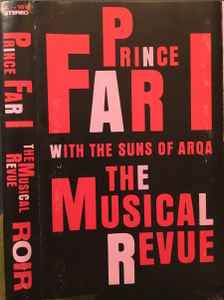
This next one in particular feels very familiar and I think it came with that first batch that included Mute Beat and the Cry Tuff tapes.
At some point in the early '90s, by this point often visiting NYC for long stays and then full-time living there, I got friendly with the guy who founded ROIR, Neil Cooper. I was burbling about jungle and he actually offered me some some money to do a jungle compilation. But the amount was too small to pay for tracks, as far as I could ascertain what the going rate for tunes was. At least the type of killer tracks I'd want to have on a scene-representing comp.
Nice guy though, Neil. And he put out some great archival documents on the label. He was a firm believer in the cassette and regarded high-quality chrome as being as good a format as any. The Prince Far I certainly sounded great.
I believe Cooper's son carried on the label after his passing and it exists to this day, albeit no longer tape-based.
^^^^^^^^^^^^^^^^^^
Tapes! I have hundreds of them still and whether through repeat-play cathexis or nostalgia, the sound of certain things on that format often sounds better to me than the CD or digital-file or streaming versions.
In some cases, the advance cassette version sounds better to me than the actual proper vinyl release a few months later, for the simple reason that this is what I fell in love with.
Isn't Anything, on vinyl, has never sounded as good as the advance tape, which had a completely different sequence, a bunch of tunes that were on the Feed Me With Your Kiss EP at the end plus the bonus single for Isn't with the Public Enemy breakbeat and ghostly wavering tones. All shoved together on a C90 in an absolutely glorious surge. The sequence sounds right to me because it's what I listened to in blissed disbelief over and over and over for a month or so prior to interviewing My Bloody Valentine.
Postscript 10/7 - fuck me I just noticed the first tune of side 2 is "Soon". Presumably a prototype for the "Soon" that would be released 18 months later as the lead track of the Glider EP in April 1990. I have no specific recollection of that track from this Isn't advance tape - but I will give it a listen to see how different it is from the immaculate consummation of the released version
I'm not sure I ever played the vinyl Isn't Anything more than a few times. It just didn't sound right. Everything was in the wrong order. The sound was cleaner and more picked-out. I preferred the lesser-fi blur of the cassette - more amorphous.
So there's tapes like that I've kept. (Also advances of things that were never released at all). And then there's all the mixtapes made by friends that you get attached to. And your own mixtapes made for parties or long-car journeys, that ended up getting a lot of use. Then there's another category of comp, which is the sort of seasonal round-up type of tracks in a genre you've bought recently. Taped really just to save the bother of getting up repeatedly to put a succession of jungle or speed garage 12-inches on the deck. These capture a moment in the genre nicely.
So this is why I have not simply chucked all these tapes on the dustbin of format history - even though when it comes to it, practically speaking, if I want to hear a tune I'll go straight to YouTube or a streamer. I can't quite bring myself to toss them out. It's sort of one or two levels below taking your pet to the vet to be put to sleep. No, it's not a living thing, but a once-beloved, much-played tape is saturated with cathexis. The cathexis of effort spent (your own or your friend's, or an acquaintance's) in the assembling of said tape. The cathexis of repeat-listening in an era when music was still relatively scarce and wasn't on tap, in an instant, like it is today, so the relative convenience of the self-made compilation or the friend-made collection was invaluable.
Plus you never know, do you? The internet may collapse, streamers may go out of business, some kind of unanticipated digital corrosion might render the compact disc compilations and CD-singles unplayable... you may someday need the analogue repositories, the vinyl and the cassettes, to hear the things you want to hear.