Flash of the Axe: Guitar Solos
from Excess All Areas issue on musical maximalism, The Wire, September 2019.
by Simon Reynolds
I can distinctly remember the first
time I let myself enjoy a guitar solo. 1983,
I’m at a party, “Purple Haze” comes on - I just went with Jimi, surrendered to
the voluptuous excess. There was a sense
of crossing a boundary within myself, like sexual experimentation, or trying a
food that normally disgusts you.
You see, growing up in the postpunk era, we were all indoctrinated with less-is-more. Exhibitions of virtuosity were frowned upon. Folklore told us of a time before punk, a wasteland of 12-minute drum solos and other feats of “technoflash” applauded by arenas full of peons grateful to be in the presence of their idols. Minimalism wasn’t just an aesthetic preference but a moral and ideological stance: an egalitarian levelling of rock’s playing field, letting in amateurs with something urgent to say but barely any chops. Gang of Four went so far as to have anti-solos, gaps where the lead break would have been. Postpunk was an era of amazingly inventive guitarwork, but even the most striking players, like Keith Levene, were not guitar-heroes in the “Clapton Is God” sense. The guitar was conceived as primarily a rhythmic or textural instrument. An example of how the taboo worked for punk-reared ears: David Byrne’s unhinged guitar on “Drugs” sounded fabulous, but Adrian Belew’s extended screech on “The Great Curve” made me flinch.
There was a sexual politics aspect to postpunk’s solo aversion: the guitar, handled incautiously, could be a phallic symbol. Willy-waving nonsense was resurging with the New Wave of British Heavy Metal. Bands like Iron Maiden were competing for the hearts and minds of youth. So if you supported the DIY feminist-rock revolution represented by the likes of Delta 5 (tough-girls and non-thrusting males united), you made a stand against masturbatory displays of mastery. Solos were, if not outright fascist, then certainly reactionary throwbacks to guitar-as-weapon machismo.
In those days, on the rare occasions I liked anything Old Wave - Blue Oyster Cult’s “(Don’t Fear) The Reaper,” say – the solo would be something to grimly wait through until the good stuff resumed (the Byrdsy verses). Then came Jimi, triggering a rethink. Another key moment in punk deconditioning came ironically courtesy of one of the class of 1977: Television, who I also heard for the first time in 1983. Where Hendrix’s “Purple Haze” solo lasts just 20 seconds, Tom Verlaine’s in “Marquee Moon” is a four-minute-long countdown to ecstasy. Its arc is unmistakably a spiritualized version of arousal and ejaculation, building and building, climbing and climbing until the shattering climax: an extraordinary passage of silvery tingles and flutters, the space of orgasm itself painted in sound.
The mid-Eighties was coincidentally when the idea of the guitar-hero began to be tentatively rehabilitated within post-postpunk culture, from the Edge’s self-effacing majesty to underground figures like Meat Puppets’s Curt Kirkwood, who channeled the spectacular vistas and blinding light of the desert into his playing. Then came Dinosaur Jr.’s J. Mascis and his phalanx of foot-pedals, churning up – on songs like “Don’t”– not just an awesome racket, but solos that were sustained emotional and melodic explorations. In interviews, Mascis namedropped long-forgotten axe icons like James Gurley of Big Brother and the Holding Company. Paul Leary and his band Buttholes Surfers signposted their influences more blatantly: even if Hairway to Steven’s opener hadn’t been titled “Jimi”, its blazing blimps of guitar-noise would’ve reminded you of “Third Stone From the Sun”.
This kind of winking, irony-clad return to pre-punk grandiosity was the rage in underground rock as the Eighties turned to Nineties. But where Pussy Galore covered (with noise-graffiti) the entirety of Exile on Main Street, that band’s Neil Hagerty, in new venture Royal Trux, stepped beyond parody towards something more reverent and revenant. The pantheon of guitar gods – Neil Young, Keith Richards, Hendrix – inhabited ghost-towns-of-sound like “Turn of the Century” and “The United States Vs. One 1974 Cadillac El Dorado Sedan”. But the effect was more like time travel than channeling – the abolition of a rock present that Trux found unheroic.
As a young critic during this period, I tried to stage my own abolition, a transvaluation that erased the now stale and hampering postpunk values I’d grown up with and ushered in a new vocabulary of praise: a maximalist lexicon of overload and obesity. Revisionist expeditions through the past were part of this campaign. When Lynyrd Skynyrd’s “Freebird” had been inexplicably reissued as a single in 1982 and became a UK hit, I could not have imagined anything more abject. But reviewing a Lynyrd box in 1993, I thrilled to the swashbuckling derring-do of that song’s endless solo, a Dixie “Marquee Moon” whose slow-fade chased glory to the horizon.
This was the final stage of depunking: the enjoyment of lead guitar as pure flash. At a certain point in rock history, solos ceased to have an expressive function and became a self-sustaining fixture, existing only because expected. Soon I found myself taking pleasure in such excrescences of empty swagger as John Turnbull’s solo in Ian Dury’s “Reasons To Be Cheerful.” I even started looking forward to Buck Dharma’s spotlight turn in “(Don’t Fear) The Reaper”.
^^^^^^^^^^^^^^^^^^^
Apart from a few academic studies of heavy metal, a surprising dearth of serious critical attention has been paid to the guitar solo. The exception that springs to my mind is the novelist’s Geoff Nicholson’s Big Noises, a collection of pithy appreciations of thirty-six notable guitarists, ranging from obvious eminences like Jimmy Page to cult figures like Allan Holdsworth and Henry Kaiser. But although Nicholson is insightful and evocative when it comes to a particular player’s style or sound, and generally revels in loudness and in-yer-face guitar-heroics, he rarely dissects specific solos. Perhaps it is simply very hard to do without recourse to technical terms. At the same time, the mechanics of “how” do not actually convey the crucial “what”—the exhilarating sensations stirred in the unschooled listener.
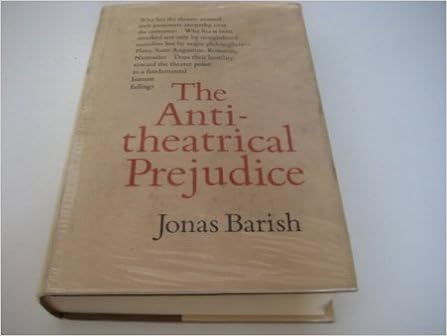
Why does the discrete spectacular display of instrumental prowess get such short shrift from rock critics? Partly it’s because of the profession’s bias towards the idea of communication—seeing music as primarily about the transmission of an emotion, a narrative, a message or statement. Prolonged detours into consideration of sheer musicality is seen as a digression, or even as decadent. I think another factor behind this disinterest in or distrust of the guitar solo is a lingering current of anti-theatricality – the belief that rock is not a form of showbiz, that it has higher purposes than razzle-dazzle or acrobatics. A guitar solo is like a soliloquy, but one that is all sound and fury, signifying nothing (or nothing articulable, anyway). It’s also similar to an aria, that single-voice showcase in opera, the most theatrical of music forms. Adding to the distaste is the way that guitar soloing is typically accompanied by ritualized forms of acting-out: stage moves, axe-thrusting stances, “guitar-face.” This makes the whole business seem histrionic and hammy, an insincere pantomime of intensity that’s rehearsed down to every last grimacing inflection rather than spontaneously felt; an exteriorized code rather than an innermost eruption.
How would you start to formulate a critical lexicon to defend, or at least, understand, this neglected aspect of rock? In the past, I’ve ransacked Bataille’s concept of “expenditure-without-return”, seeing a potlatch spirit of extravagance at work in the sheer gratuitousness of sound-in-itself. That in turn might connect the soloist’s showing-off to an abjection at the heart of performance itself – the strangeness of exposing one’s emotions and sexuality in front of strangers. Another resource might be queer theory and camp studies, especially where they converge with music itself, as in Wayne Koestenbaum’s book about opera, The Queen’s Throat. The guitar hero could be seen, subversively, as a diva, a maestro of melodramatics.
The ultimate convergence of these ideas would be Queen - the royal marriage of Freddie Mercury’s prima donna preening and Brian May’s pageant of layered and lacquered guitars. Queen’s baroque ‘n’ roll made my flesh crawl as a good post-punker, but as a no-longer solo-phobe, I’ve succumbed to their vulgar exquisiteness. From the phased filigree of “Killer Queen” to the kitsch military strut of “We Will Rock You”, May’s playing is splendour for splendour’s sake – a peasant’s, or dictator’s, idea of beauty. Anti-punk to the core, and perhaps the true and final relapse of rebel rock into show business.