FIRST PAST THE 'POST': in praise of "in-between" periods in pop history
director's cut, written early 2008; published Slate, May 29, 2009
by Simon Reynolds
Pop music history is biased towards "the right place and the right time". Just like its respectable elder relative with its decisive battles and seismic elections, pop history fixates on origins and breakthroughs, magical years of transformation and turmoil, and cusp points when undergrounds go overground. It gives far less attention to those stretches of time in between the upheavals-- years of drift and diaspora, periods without an easily discernible "vibe", Zeits devoid of Geist. Geographically, too, pop historians favor major metropolises over activity out in the provinces and suburbs. Time and again they locate the motor of pop change in small cliques operating out of the capital cities (albeit cultural capitals in the case of, say, New York or Berlin) along with cities like Manchester or or Seattle or San Francisco that briefly assert themselves as the place to be.
I've been an obsessive music fan for thirty years, a "professional fan" a.k.a. critic for twenty-two of them, yet I've only ever managed to be in "the right place at the right time" once, maybe twice. Pretty poor going for someone living first in London and then in New York. But partly because of this recurrent feeling of belatedness and partly because I spent my teenage years in a suburban commuter town far from the action, I've long had the rock historical equivalent of sympathy for the underdog. But in my case it's less to do with geography (supporting regionalism) and more to do with a special interest in those expanses of pop time that gets skipped over quickly by pop chroniclers.
Makers of rockumentary series for TV are the worst offenders. It rankles a bit the way that the late Eighties (when I started to write for the UK music press) is now treated as a mere prequel to grunge. The recently aired Seven Ages of Rock series was a marked improvement on earlier TV histories of rock, which tended to jump straight from Sex Pistols to Nirvana. But its episode on US alternative rock nonetheless still presented groups like the Pixies, Dinosaur Jnr, and Sonic Youth as just preparing the ground for grunge. Respected precursors and vital influences, maybe, but ultimately--as if time's flow was somehow reversed--advance echoes of the truly epochal Nirvana. That's not how it felt at the time: Sonic Youth and the rest seemed to us full-formed significances in their own right, creative forces of monstrous power, even time-defining in their own way (albeit through their refusal of the mainstream). My Melody Maker comrade David Stubbs wrote an end-of-year oration proclaiming 1988--annum of Surfer Rosa, Daydream Nation, My Bloody Valentine's Isn't Anything… to be the greatest year for rock music… ever! We actually believed this and our fervor was infectious, striking an inspirational, Obama-like chord with young readers heartily sick of the idea that rock's capacity for renewal had been exhausted in the Sixties or the punk mid-Seventies. Yet that period will never truly be written into conventional history (despite efforts like Michael Azerrad's Our Band Could Be Your Life) because it's not got a name. It's too diverse and it's not easily characterized--for instance, the groups were "underground", except that by 1988 most of them--Husker Du, Throwing Muses, Sonic Youth, Butthole Surfers-- had already signed, or soon were to sign, to majors. Finally, it'll never get fairly written into history because, dammit, grunge did happen, retrospectively recasting this period forevermore as build-up to the main event.
Being turned into a prequel isn't the only indignity that can befall one of those inbetweeny phases of rock history. The other humiliating fate is to be deemed an aftermath. Reclaiming one such period of "fall-out" was the polemical drive behind my postpunk history Rip It Up and Start Again, an attempt to challenge the perennial fixation on punk as the Big Bang and the corresponding tendency to see what came next as a scattered diminuendo, an entropic dissipation of focus and energy. Instead I wanted to recover my own lived sense of the period as not a dwindle into disparateness but as the true fruition of punk's ideas and ideals. The after-zones of rock history are hard to grasp precisely because they're so various. This rich muddle demands identifying labels that are umbrella-broad and open-ended. Hence postpunk: not a genre so much as a space of possibility, out of which new genres formed like Goth, industrial, synthpop, mutant disco, and many more.
I can think of at least a couple more "post+hyphen" terms that could usefully redraw the map of pop music history:
Post-disco. Disco is often said to have died in 1979. That's when the "disco sucks" backlash peaked with the infamous July 12th 1979 'Disco Demolition' night rally at Comiskey Park in Chicago, when thousands of disco records were blown up on the field midway between a double-header; it's the year that radio dropped the disco format en masse as opportunistically as it had jumped on the bandwagon in the first place, the year that record sales for the genre began to slide precipitously. Casablanca, disco's leading label, started to get into financial difficulties, while Studio 54, its most famous club, closed in February 1980. But people didn't stop dancing and disco music didn't vanish from the Earth. Instead, the genre mutated while the movement itself fragmented into a panoply of subscenes that appealed to specific tribes of the once united disco nation, styles like Hi-NRG (a tautly sequenced, butt-bumping sound big in the hardcore gay clubs), Freestyle (beloved by Hispanic youth in New York and Miami), Italodisco (the bastard bambini of Giorgio Moroder) and so forth. With these and other post-disco offshoots, the classic sonic signifiers of heyday mid-Seventies disco--the shuffling hi-hat driven beat, walking basslines, tempestuous string-swept orchestrations--faded away as the music became increasingly electronic, based around drum machines, sequenced basslines and synth-licks. But the torrid diva vocals endured as did disco's raison d'etre (igniting the dancefloor, providing release at the weekend) along with much of the infrastructure of a clubbing industry that disco had built during the Seventies.
Bridging the so-called death of disco and the birth of house, all this early-to-mid-Eighties music lacks a name beyond drably functional and neutral terms like 'dance' or 'club music'. Post-disco is better because this was music created by and for people--in New York, Miami, Montreal, and, if truth be known, most of the UK and Europe--who refused to accept the official decree of disco's demise. But they didn't just stick with the classic disco sound frozen forever as golden oldies; their restless demand for "fresh" forced the music to keep moving forward. It's not even that disco went completely underground. In some places, it did--Chicago, where the gay black scene would eventually hatch house music. But elsewhere post-disco sounds regular ventured into the mainstream. Take the style sometimes known at the time as electrofunk, a post-disco sound of juicy-fruit synths and nubile programmed grooves associated with New York labels like West End and Prelude, artists like Peech Boys and Sharon Redd, and producers like Arthur Baker and Francois Kevorkian. D-Train's "You're The One for Me" and the Arthur Baker-produced Rocker's Revenge tune "Walking On Sunshine" topped Billboard's Hot Dance Music chart in 1981 and 1982 respectively, while in the UK "Sunshine" was a Number 4 hit on the pop charts. Shannon's brash, crashing "Let The Music Play"--sometimes identified as the birth of Freestyle--was a top Ten US pop hit in 1983. So we're not exactly talking about some arcane crevice of pop history here, the esoteric lore of record-collectors. Moreover, the careers of Madonna, New Order and the Pet Shop Boys were largely launched off the back of ideas spawned in the post-disco era. New Order cheered themselves up after Ian Curtis's death by listening to tapes of Italodisco, further banishing the gloom on trips to New York where they checked out the clubs and holed up in their hotel rooms listening to Shep Pettibone's then-groundbreaking extended mix shows on Kiss FM. After their first real club smash, the Hi-NRGized "Blue Monday", New Order recorded "Confusion" with Arthur Baker, got DJ (and Madonna boyfriend) Jellybean Benitez to test the prototype version at the Funhouse, and, for the video, documented the Freestyle-loving Latin kids who clustered around that club.
Post-psychedelic. The reigning view of psychedelia, at least in America, is as a slightly embarrassing fad that was served notice early in 1968 when Bob Dylan released the recorded-in-two-days simplicity of John Wesley Harding. Dylan acolytes swiftly followed suit, from The Band with their equally steeped in rootsy Americana Music From Big Pink to The Byrds with their country-rock album Sweetheart of the Rodeo. The sharp critical view to take on Sgt. Pepper's has long been that it's a pretentious mess compared to its predecessor Revolver; sharper still is the claim that Rubber Soul is better than the already-getting-quite-psychedelic Revolver. The stance is strengthened by the Beatles's own rapid retreat circa 1968 from studio-as-instrument frippery with the Chuck Berry-styled “Back In the USSR,” twelve-bar bluesy “Revolution” and gritty "Get Back". Likewise The Stones followed Their Satanic Majesties Request, their debacle attempt to match Sgt. Pepper’s, with the stripped-bare virility of “Jumpin’ Jack Flash” and “Street Fighting Man”, while The Doors recovered their mojo with the hard bluesy Morrison Hotel. In the final year of the decade that had once hurtled full-tilt into the future and out into the cosmos, Creedence Clearwater Revival's faux-Southern rock'n'roll dominated American airwaves, while the UK was over-run with blues bores.
But just as disco never died in a lot of hearts, there were plenty of people active at the end of the Sixties and into the early Seventies who kept faith with the visions of 1967. They kept on making music that while not always blatantly trippy nonetheless took its bearings from landmark psychedelic records like Pink Floyd's The Piper at the Gates of Dawn and A Saucerful of Secrets, The Incredible String Band's the Hangman's Beautiful Daughter, Traffic's Dear Mr. Fantasy, Donovan's A Gift From A Flower To A Garden, Soft Machine's self-titled debut. I'm not just talking about the obviously out-there kosmische rock and space rock of the era (Tangerine Dream, Can, Faust, Hawkwind, Gong) but some of the maverick singer-songwriters of the early Seventies: John Martyn with his rippling after-trails of echoplex guitar, Robert Wyatt's astral scat song and tape-as-canvas daubing, Tim Buckley's zero-gravity vocal acrobatics on Starsailor. Ex-Soft Machine singer Kevin Ayers's solo career flitted between Donovan-like ditties full of quaint English charm to transcendental tapestries of guitar-flicker such as his Nico-paean "Decadence". Even certain artists we normally file under 'glam' were indelibly marked by psychedelia: Roxy Music's personnel included Brian Eno, a Syd Barrett admirer and believer in using the recording studio to create sonic phantasms, and the obviously Hendrix-damaged Phil Manzanera.
Like the after-disco and after-punk phases, this is a rich, diffuse era that suffers for the lack of a name. It's not exactly 'progressive' although at various points it overlaps the terrain we generally think of as 'prog rock', while at its other boundaries it intersects with 'folk' and 'singer-songwriter'. What unifies it more than style or sound is a shared infrastructure (the artists were mostly clustered around certain key labels--Harvest, Island, Charisma, Virgin, UA, Elektra) along with a common set of preoccupations, values and approaches: the classic 1967-style fascination for the bucolic and the child-like, a spirit of gentle and sometimes genteel experimentalism, a whimsical sense of humour tinged with melancholy. At the time people often talked of "the underground"--a nebulous concept at best, based around sensibility more than anything, but again speaking to these artists having a common departure point circa 1966-67. This underground blurred into the overground: most of the groups were on 'head'-oriented boutique imprints of major labels (Harvest for instance being a sub-label of EMI) or on large independents labels like Island that, while aesthetically autonomous and highly adventurous, relied on major label distribution. Moreover some key figures from this quasi-underground--Kevin Ayers' s former sideman Mike Oldfield, Pink Floyd--would eventually release some of the biggest selling albums of the era, while never totally losing their links to their old comrades.
Post-punk, post-disco, post-psychedelic: ungainly as they are, these terms seem necessary to me, providing a handle on elusive but fertile regions of music history. Fuzzy at both temporal ends (they slow-fade into indistinction while never totally going away), they're hard to perceive as distinct eras in their own right. Their richness challenges History's fixation on the Event, the Turning Point, the Revolutionary Moment. And their diversity challenges the historian: how to locate and convey the "feel" of an era, the communality of consciousness shared by all those belated souls who lived and created under the sign of the "post-".
Afternote:
There are some other post+hyphen genres out there but to my mind they describe something quite different to the above. Take 'post-rock', a term that mysteriously emerged in the early 90s to describe experimental guitar-bands that increasingly abandoned guitars altogether (oh okay, it was me that came up with that one). But post-rock doesn't have the same temporal aspect that post-disco or post-punk have, it's not about the ripples set in motion by a galvanising Event. Rather it evokes a sense of 'going beyond' the strictures of a genre of music without completely abandoning its legacy of attitudes and assumptions. For similar reasons, the term 'post-metal' seems increasingly useful to describe the vast and variegated swathe of genres (the thousand flavors of doom/ black/death/grind/drone/sludge/ etc, ad infinitum) that emerged from the early 90s onwards. Sometimes beat-free and ambient, increasingly the work of home-studio loners rather than performing bands, post-metal of the kind released by labels like Hydra Head often seems to have barely any connection to metal as commonly understood by, say, VH1-Classic doc-makers. The continuity is less sonic but attitudinal: a penchant for morbidity and darkness taken to a sometimes hokey degree, the somber clothing and the long hair, the harrowed, indecipherably growled vocals , the bombastically verbose lyrics/song titles/ band names. It's that rather than a way of riffing or a palette of guitar sounds that ties post-metal back to Judas Priest and Black Sabbath.
Wednesday, November 18, 2009

Monday, November 16, 2009
Mantronix profile + manifesto (1987) + review of Music Madness (1986)
MANTRONIX, Music Madness (10 Records)
Melody Maker, December 6th 1986.
by Simon Reynolds
Mantronix don’t quite fit. Hip hop is getting to be more and more of an assault, more and more hyper-compressed and minimal in its search for harder and higher hits. But Mantronix are loosening up their music, bringing in a suppleness and textural luxury. Hip hop daily exceeds new levels of megalomaniac viciousness. But Mantronix are gradually squeezing the SELF out of their music, letting the music stand on its own madness.
Compare what Mantronix are doing with a track that represents some kind of zenith in current hip hop trends--“The Manipulator” by Mixmaster Gee and The Turntable Orchestra (off Electro 14). Here skill on the turntables becomes a twisted, bloated metaphor for omnipotence. The voice shoves itself RIGHT IN YOUR FACE--you can practically feel the spittle, smell the breath. It’s a voice intoxicated with power, quaking with rage.
Melody Maker, December 6th 1986.
by Simon Reynolds
Mantronix don’t quite fit. Hip hop is getting to be more and more of an assault, more and more hyper-compressed and minimal in its search for harder and higher hits. But Mantronix are loosening up their music, bringing in a suppleness and textural luxury. Hip hop daily exceeds new levels of megalomaniac viciousness. But Mantronix are gradually squeezing the SELF out of their music, letting the music stand on its own madness.
Compare what Mantronix are doing with a track that represents some kind of zenith in current hip hop trends--“The Manipulator” by Mixmaster Gee and The Turntable Orchestra (off Electro 14). Here skill on the turntables becomes a twisted, bloated metaphor for omnipotence. The voice shoves itself RIGHT IN YOUR FACE--you can practically feel the spittle, smell the breath. It’s a voice intoxicated with power, quaking with rage.
MC Tee from Mantronix, in comparison, has a refreshingly adolescent voice, almost sweet--words are slurred, there’s the tiniest suggestion of a lisp. “Manipulator” style hip hop is given its impetus by being focused on the tyrannical charisma of the rapper, but with Mantronix the
raps seem almost superfluous. There are several instrumentals. With most hip hop the very sound of the music is a MASSIVE COCK waving about in your face. Mantronix erase every trace of the pelvis, every last ditch of humanism in hip hop. Their music isn’t weighted down by the heaviness of masculinity, but glides, skips, even frisks at times, rather than thuggishly stomping us weaklings underfoot. Mantronix sound disembodied, dislocated, out-of-it.
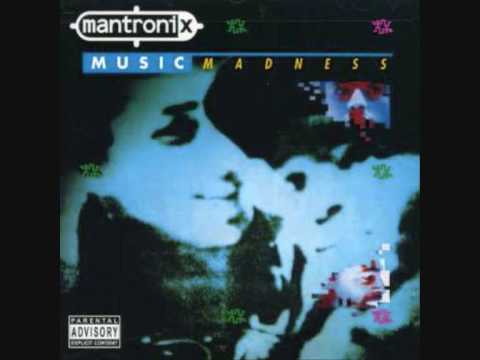
They are far out, a long way from firm ground. Mantronik marshals a host of uprooted fragments and abducted ghosts into a dance. He thieves indiscriminately, without prejudice, enlisting anything from Benny Goodman to The Old Grey Whistle Test theme tune. On “We Control the Dice” they even indulge in self-kleptomania (or perhaps simple thrift is at work), re-using the bass motif from “Bassline”. Their greatest influence, though, is European electropop--the scrubbed, spruce, pristine textures and metronomic precision of Kraftwerk and Martin Rushent’s Human League. While the brainy British bands of the day dedicate themselves to noisy guitars, it’s up to Mantronix (and House music) to uphold the spirit of 1981, to cherish the bass sound and the electronic percussion of “Sound of the Crowd” as a lost future of pop.
They have moments close to wildness-“Big Band B-Boy” commandeers a jungle of percussion--but I prefer it when Mantronix sound stealthy. “Scream,” with its curiously muted delivery of a party-up lyric (the word “scream” is almost whispered) is as eerie as Suicide lullabies like “I Remember” or “Cheree”. The title track has a roaming, furtive sense of space, the phrase “music madness” sampled, stretched and
melted into a series of beautiful belches. Best of all is the closing “Megamix”, in which everything you’ve been listening to for the last half-hour is regurgitated inside out and upside down, flashing before your ears like a drowned, garbled life. Sublime pandemonium.
Music Madness is the kind of music you’d hoped The Art of Noise would go on to make after “Close (to the Edit)”. Fleshless, soulless, faceless and fantastic.
by Simon Reynolds

raps seem almost superfluous. There are several instrumentals. With most hip hop the very sound of the music is a MASSIVE COCK waving about in your face. Mantronix erase every trace of the pelvis, every last ditch of humanism in hip hop. Their music isn’t weighted down by the heaviness of masculinity, but glides, skips, even frisks at times, rather than thuggishly stomping us weaklings underfoot. Mantronix sound disembodied, dislocated, out-of-it.
They are far out, a long way from firm ground. Mantronik marshals a host of uprooted fragments and abducted ghosts into a dance. He thieves indiscriminately, without prejudice, enlisting anything from Benny Goodman to The Old Grey Whistle Test theme tune. On “We Control the Dice” they even indulge in self-kleptomania (or perhaps simple thrift is at work), re-using the bass motif from “Bassline”. Their greatest influence, though, is European electropop--the scrubbed, spruce, pristine textures and metronomic precision of Kraftwerk and Martin Rushent’s Human League. While the brainy British bands of the day dedicate themselves to noisy guitars, it’s up to Mantronix (and House music) to uphold the spirit of 1981, to cherish the bass sound and the electronic percussion of “Sound of the Crowd” as a lost future of pop.
They have moments close to wildness-“Big Band B-Boy” commandeers a jungle of percussion--but I prefer it when Mantronix sound stealthy. “Scream,” with its curiously muted delivery of a party-up lyric (the word “scream” is almost whispered) is as eerie as Suicide lullabies like “I Remember” or “Cheree”. The title track has a roaming, furtive sense of space, the phrase “music madness” sampled, stretched and
melted into a series of beautiful belches. Best of all is the closing “Megamix”, in which everything you’ve been listening to for the last half-hour is regurgitated inside out and upside down, flashing before your ears like a drowned, garbled life. Sublime pandemonium.
Music Madness is the kind of music you’d hoped The Art of Noise would go on to make after “Close (to the Edit)”. Fleshless, soulless, faceless and fantastic.
MANTRONIX
Melody Maker, August 1st 1987
FORGET “THE SONG”
Mantronik does not write Good
Songs. He is not an author, but an engineer, an architect. His music is not the
expression of his soul, but a product of his expertise. What Mantronik does is
construct a terrain, a dance-space in
which we can move, float free. Unlike the Rock Song, there’s no atmosphere, no
nuances, no resonance, here: instead, simply a shifting of forces, torques,
pressures, gradients. Mantronik’s work (and it is work) is neither
expressionist nor impressionist--it’s cubist, a matter of geometry, space,
speed, primary colours (not the infinite shades and subtle tones of meaning).
Populist avant-gardism.
The song is the primary object of
Rock Criticism--the work of art as a coherent, whole expression of a whole
human being’s vision. Most rock criticism is poor Lit Crit, forever trying to
pin down pop to What’s Being Said (whether that’s nuggets of “human truth” or
blasts of “social commitment”), forever failing to engage with the materiality
of music. A Mantronix track isn’t a song, a finished work but a process, a
space capable of endless extension and adaption; a collection of resources to
be rearranged and restructured. Hence the six different mixes of “Who Is It?”;
hence the closing “Edit” on the last LP Music
Madness, in which the whole album is compressed into a volatile six minutes
reprise; hence the “Primal Scream Dub” of “Scream”, the fantabulous new single,
virtually an entirely new piece of music altogether…
FORGET THE HUMAN
Pop is drowning itself (and in the
process drowning us) with “humanity”--from the sickening, hyperbolic “care” of
“Let It Be” and “We Are the World” to the firm, all too firm flesh throbbing in “I Want Your Sex”. Swamped by this
benign, beige environment, this all-pervading warmth, it’s scarcely possible to feel the shiver down the spine,
the sharp shudder of ecstasy: modern pop
just massages you all over, comforts and reassures. Practically every walking
minute of our lives we’re condemned to be human, to care for people, to be
polite, to be socially concerned. Should’nt our leisure (at the very least; for
a start) be a place we can escape our humanity? A place to chill?
Mantronix make perhaps the most
nihilistic music on the planet today; only House could claim to be more blank.
Unlike rock nihilism, this is nihilistic without any drama, without an iconic
figure like Michael Gira or Steve Albini--the creator simply, silently, absconds;
creates an environment in which nothing of himself resides.
Unlike the first LP, which shared
with hip hop a boastful, “deffer than the rest”
rapping style, on Music Madness
the megalomania is vested in the whole expanse of sound, the inhuman perfection
of the dance environment, rather than a charismatic protagonist. Poor MC Tee!
This last token of the human seems to be fading fast. It’s as though someone
has taken an eraser and all but rubbed him out of the picture: a little lost
voice wandering in a vast, intimidating Futurist adventure playground. And the
words uttered, in that fey, fragile voice, are little more than psychedelic
gibberish, a vestigial anchor for us to centre our attention, otherwise
dispersed and fractured across the jags and fissures of the mix. Mantronik is
candid about the relative importance of text and material: “the words don’t
mean shit, there’s no lyrical structure, but the shit pumps!”
You’re horrified, but after all,
isn’t pop all about the desire to transcend or step sideways from the cage of
one’s humanity? To be more, less or other than simply, naturally human: to
become angel, demon, ghost, animal (butterfly or invertebrate). Mantronik’s
desire is to be superhuman; he envies the prowess, the infallibility of the
machine. He loves all the sci-fi films (the techno-heroic strand in science
fiction that buffs call “hard sci-fi”, rather than New Wave s.f.’s odysseys
into “inner space”). There are links between Electro’s space age imagery and
the sword’n’sorcery/superhero comic book elements in heavy metal, speed metal…
similar male fantasies of omnipotence and invulnerability.
For Mantronik, sampling is his
“special power”, the key to demi-godhead. “You can take a sound, any sound, and
you can tamper with it. Add other sounds to it. Look at its wave formations on
a screen, and change the patterns around. And you don’t have to take sounds off
records, you can get them from the environment, from hitting things against
the wall, anything. And with my set-up, I can record music right up to the
point doing vocals, in my bedroom. Then
I go into a studio. With samplers, I never read the instructions. I like to
learn from my mistakes and incorporate blunders.”
FORGET SOUL
For Mantronik, the history of
Black Dance Music doesn’t begin with James Brown, Sly Stone, George Clinton,
even Van McCoy or Chic; it begins with Kraftwerk and flowers with Trevor Horn’s
Art of Noise. It was the krafty krauts’ glistening plastic vistas and stainless
girders, plus Art of Noise’s fleshless, faceless, sense-less and soul-less
techno-symphonic sky’s-the-limit mastery that first made him want to make dance
music. Indeed, Mantronik seems to take Trevor Horn as a kind of guardian spirit
or touchstone, talking of how he’s “now working on stuff that would blow Trevor’s
mind. I’m working on things Trevor wouldn’t even understand.”
Mantronik’s attitude to the past
is strictly utilitarian, post-modern pagan; there’s no veneration, no
allegiance to outmoded [beats]. His reprocessing of the past in in accordance
with functionalist criteria, not nostalgia. “All those old Seventies percussion
lines were recorded real rough, real shitty, using dirt cheap reverbs. There’s
a certain old, gritty sound you just can’t achieve in a modern studio. What I
do is take that old sound and bring it back, into the future.”
There’s nothing in the way of the
rockthink cult of the origin, of roots here, but rather an insatiable pursuit
of the fresh, the ultra-modern. “The old music bores me.” Styles and beats
have a rapid turnover, are produced in factory conditions. Mantronix are simply
the latest stage in a long history of black music; the largely unwritten
history of corporoate design, brand names, backroom technicians, rather than
sacred cow artists or communities struggling to be heard.
What troubles critics about
Mantronix, about house, is that they’re illegible.
You can’t read anything into them. There’s no text, just texture, and those who
endeavour to wrap meanings around the music are always shown up, the failed
despots of discourse. The sheer opaque, arbitrary
force of the music slips the net of meaning, again and again.
Instead, for those who listen, there’s the fascination of
details, a seduction in the endless intermittence of dub. “The new stuff? A
whole mix of things. Not play-it-safe. Kind of teasing, flirtatious. I’m not
gonna give it to the listener all at once. It’s like if you’re going out with a
girl, and she gives it you straightaway, you lose interest.” Mantronix never
lose you, even as you lose yourself.
Tuesday, November 10, 2009


Subscribe to:
Posts (Atom)